Holiday Jerk Turkey
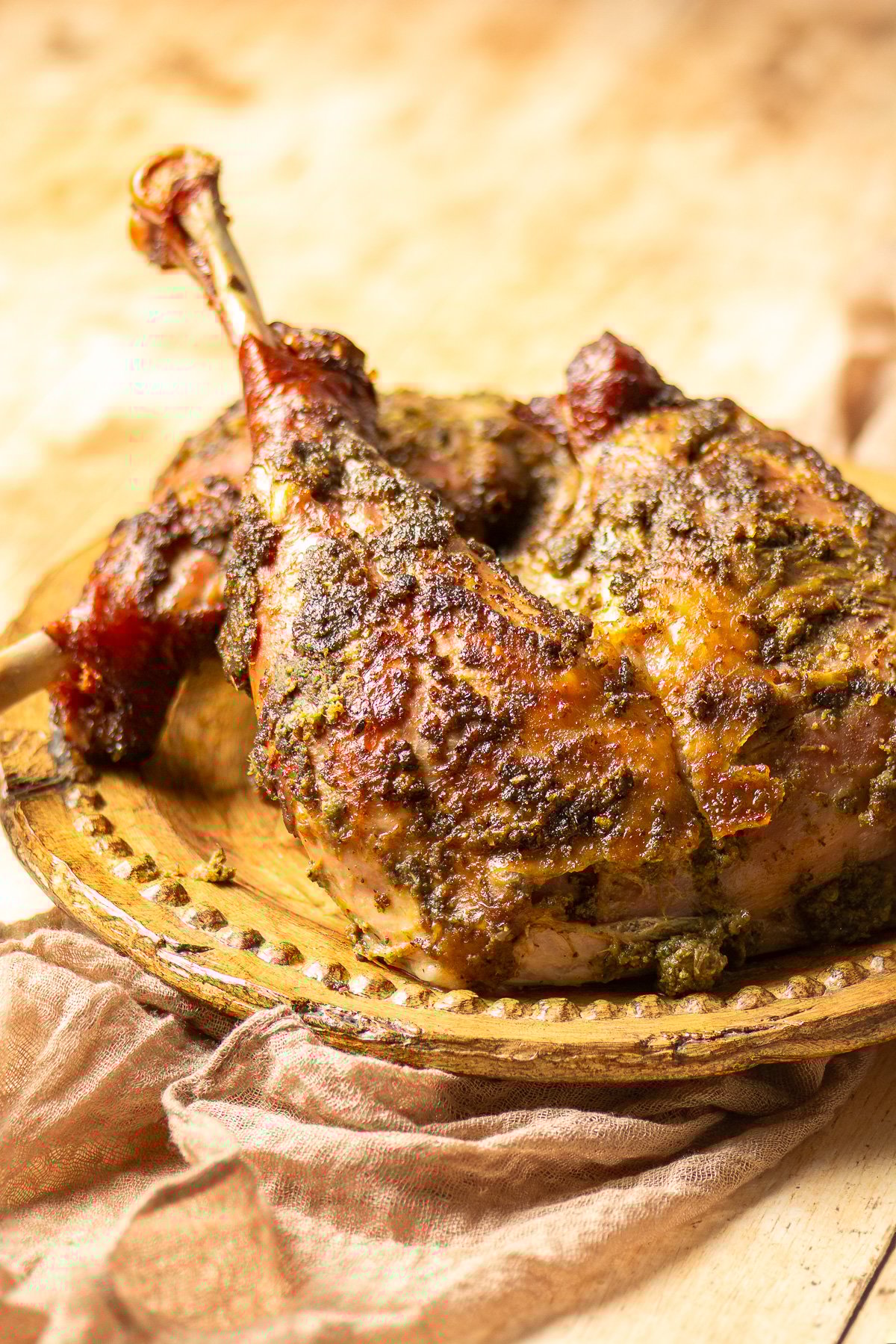
If you want a Thanksgiving centerpiece that actually delivers on flavor, this holiday jerk turkey is the answer to your prayers!

"Turkey tastes like wet napkins." Not over here! This is a juicy and tender turkey, packed with bold Caribbean flavor and smoky jerk aroma right down to the bone. It's the perfect way to bring something special (and way more exciting) to your holiday table. Plus it's guaranteed to wow guests! This turkey uses a wet brine for maximum flavor infusion and is then marinated in a compound jerk butter using my authentic jerk marinade recipe.
Don't feel like wrestling with a turkey? No worries, try out my authentic jerk chicken recipe. It's just as special but will save you a couple steps (and dollars)!
Key Ingredients
Whole young turkey. A young turkey is slaughtered between 4-6 months. The meat tends to be more flavorful and tender than older, larger turkeys. This recipe gives enough marinade for a 12-16 lb turkey.
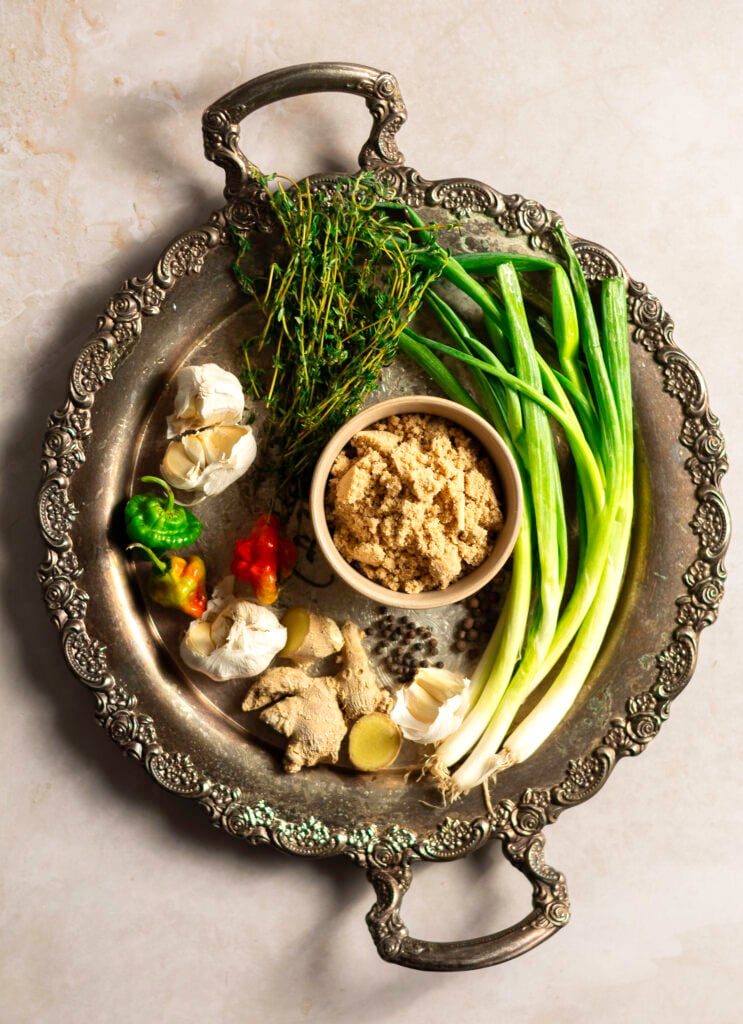
Jerk seasoning. Scotch bonnet peppers, allspice, scallions (or green onions), fresh thyme, garlic, ginger & brown sugar. This jerk rub doesn't include soy sauce, cinnamon or nutmeg - I find these ingredients are typically used to compensate for a lack of smoky flavor in oven or stovetop jerk recipes
Kosher salt and brine aromatics. Brining the turkey is crucial to a juicy finished jerk turkey and it ensures that flavor permeates throughout the entire turkey and just not on the surface. This jerk turkey uses a wet brine to also infuse and reinforce the flavors of the jerk rub.
Butter. A jerk compound butter is made. The butter carries more flavor and helps keep the skin crisp on the turkey as it cooks!
Wood chunks. Traditionally, jerk is made with pimento wood (allspice wood) but over decades, due the popularity of jerk in Jamaica, this has cause sustainability issues with pimento trees. As a result, to protect local flora and fauna, Jamaica's Environment and Planning Agency has urged against harvesting the wood from pimento trees. In place of the traditional pimento wood most jerk chefs now use what they refer to as "sweet wood" to infuse that crucial smoky flavor into jerk. For this jerk turkey recipe apple, cherry or peach wood will all work!
Tips for the Best Thanksgiving Jerk Turkey
Brine the turkey then allow marinate overnight. Brining and marinating times are especially important when cooking whole birds since it not only allows for the flavors to absorb throughout all the meat but it also helps to tenderize the muscle!
Use wood chunks or logs for smoking. If you will be placing your wood directly over coal, chunks and logs are preferred since they won't burn out as quickly. This is important for multiple reasons. First, this reduces the number of times you will have to open the grill which would cause the internal temperature to drop. Second, it reduces the amount of thick white smoke your turkey is exposed to which can cause an acrid and overly bitter flavor in your finished thanksgiving jerk turkey.
Skip the soak for the wood chunks. Soaking the wood means it will take longer to heat and only dry wood can create smoke to flavor the jerk turkey.
Use a meat thermometer! A meat thermometer is a must when cooking whole birds or meats especially if not spatchcocked as it can take longer than expected for areas like the thigh to be cooked. I have used this one. Although it's a cheaper option it does require you to be closer to get accurate updates. My go-to is more expensive but has longer range so you're free to run around and prep the rest of your Thanksgiving dinner. Try checking your home-improvement stores for a good meat thermometer. I've often seen fancy ones marked down by 40-50%!
Can I make jerk turkey on a gas grill?
While gas grills are not designed to smoke meat, a crucial step in making your jerk turkey, it is possible. Not only that, but gas grills make it easier to maintain the needed temperature for smoking.
To smoke the turkey on a gas grill, set up two zones - a "hot" zone and "cooler" zone - just like you would if using a charcoal grill. To do this, fire the burners on the grill, making sure that the ones directly below the turkey are on low-medium heat. The burners on either side of the turkey will be on medium-high heat. The ambient temperature of your grill should be around 450°F
For smoke, a smoker tube or box filled with wood pellets or chips is best for gas grills as the box/tube helps to control the rate of the burn and decreases the amount of thick, white smoke that is released. This is especially optimal since most gas grills don't have the same venting options as charcoal grills or smokers.
What is thin blue smoke and why is it important?
"Blue" smoke indicates a clean-burning fire while the thick white smoke indicates the presence of creosote (a chemical that causes a bitter taste). In most cases, white smoke is caused by incomplete combustion and can be remedied in most cases by doing one or more of the following:
1. Increasing airflow to the fire
2. Avoid placing too much wood directly on to the charcoal because it will smother the charcoal, causing a fierce, fast burning fire. 2-4 chunks should be more than enough to start with. Replace wood chunks only when the previous have burned out completely.
3. Ensuring that charcoal has been properly lit and have ashed over before piling in grill/smoker
How to Make the Perfect Jerk Turkey for Thanksgiving
Prepare the Brine
Step 1. Figure out how much water you will need to cover your turkey in your chosen container. Add your whole turkey (still in it's packaging), to your chosen container and fill it with water until the turkey is completely covered. Make note of how much water you will need.
For the brine, use ½ a cup of Kosher Salt and ½ a cup granulated sugar per gallon of water.
So just divide the total gallons of water you will need by 2 and this will be the amount of Kosher salt & granulated sugar in cups that you will use for your brine.
For comparison, I used this 5-gallon bucket for a 12-pound turkey and covered it with three and a half gallons of water. I used one and three-quarter cup each of Kosher salt and granulated sugar in my brine along with the listed aromatics (3.5÷2=1.75).
Step 2. Add the allspice berries, thyme, ginger and 8 cups of water (from the water needed to cover the turkey) to a large pot and bring to a boil. Once the water comes a boil, remove the pot from the heat and allow the water to cool completely.
Boiling at this step helps "bloom" the flavor from the aromatics to they can better absorb into the turkey.
Step 3. Add the now cooled aromatic water and the rest of the cold water needed to cover the turkey to your chosen brining container.
Step 4. Add half a cup each of Kosher salt and granulated sugar per gallon of water used as explained earlier to the brining container. Stir until the salt & sugar are completely dissolved.
Step 5. Rinse turkey and remove the innards and turkey neck in the cavity (saving them for later if you want to make gravy with the giblets). Slowly submerge the thawed turkey in the prepared brine. Cover the container with the lid and refrigerate for 12-24 hours.
Spatchcock & Marinate the Turkey in the Jerk Rub
Step 1. Add all the ingredients for the jerk rub (half of softened butter, dark brown sugar, scallions, thyme, ginger, garlic, salt, scotch bonnet peppers and allspice berries) to a high-powered blender or food processor and blend until completely smooth. Set aside, reserving a tablespoon to be used later when injecting the turkey with more flavor.
Step 2. Remove the turkey from the brine, draining it of any excess liquid. Do not rinse. Use paper towels to pat the turkey and get rid of any excess moisture.
Step 3. Using a sturdy pair of kitchen shears, cut along either side of the spine to completely remove the back bone. You may discard the backbone or save it for a homemade stock or to use in your turkey gravy.
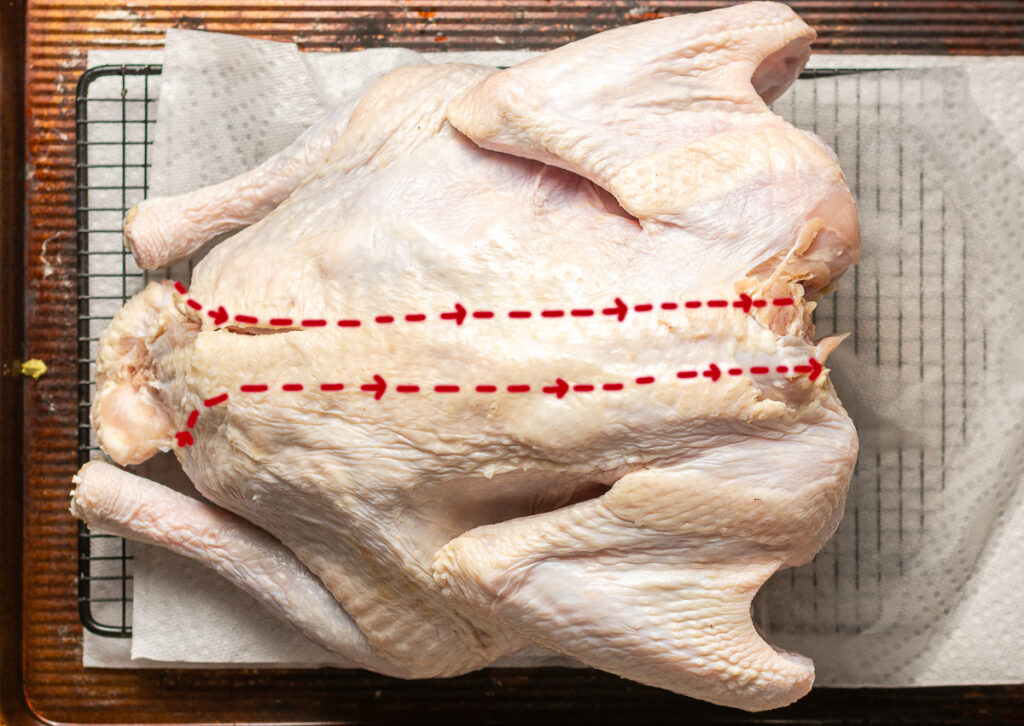
Step 4. Break the breast bone of the turkey. Position the turkey breast side up then assume a "CPR" stance. Place your dominant hand on top of the other and interlock your fingers. Position the heel of your bottom pan over the most protruding section of the center of the breast. Position your shoulders over the turkey and using your body weight, push down with your dominant hand to crack the breast bone. You should hear or feel a "pop" and the turkey should be able to lay flat.
Ensure there is no excess water and use a textured but flat surface like a textured cutting board. Excess water can cause the turkey to slide from under you when cracking the breast bone resulting in a mess or worse, an injury.
Step 5. Using your fingers, gently pull the skin of the turkey away from meat. Be careful not to tear the skin. Using paper towels again, pat the turkey dry on both sides and under the skin to get rid of any moisture.
Moisture is the enemy of caramelization (and crispy skin) and will prevent the skin from browning efficiently. Excess water also prevents the butter-based marinade from adhering to the meat of the turkey.
Step 6. Apply the jerk marinade to the turkey, making sure to get an equal amount of the marinade under the skin as on top and on the underside of the spatchcocked turkey.
Step 7. Place the turkey on a rack breast-side up with the legs turned inward then place the rack in a roasting pan or other large enough baking tray.
Step 8. Melt the remaining butter along with the tablespoon of jerk marinade reserved earlier. Allow the fat to settle out then draw up the melted butter into a marinade injector. Inject in several parts of the turkey equally. Be sure to inject into each breast, thigh and leg.
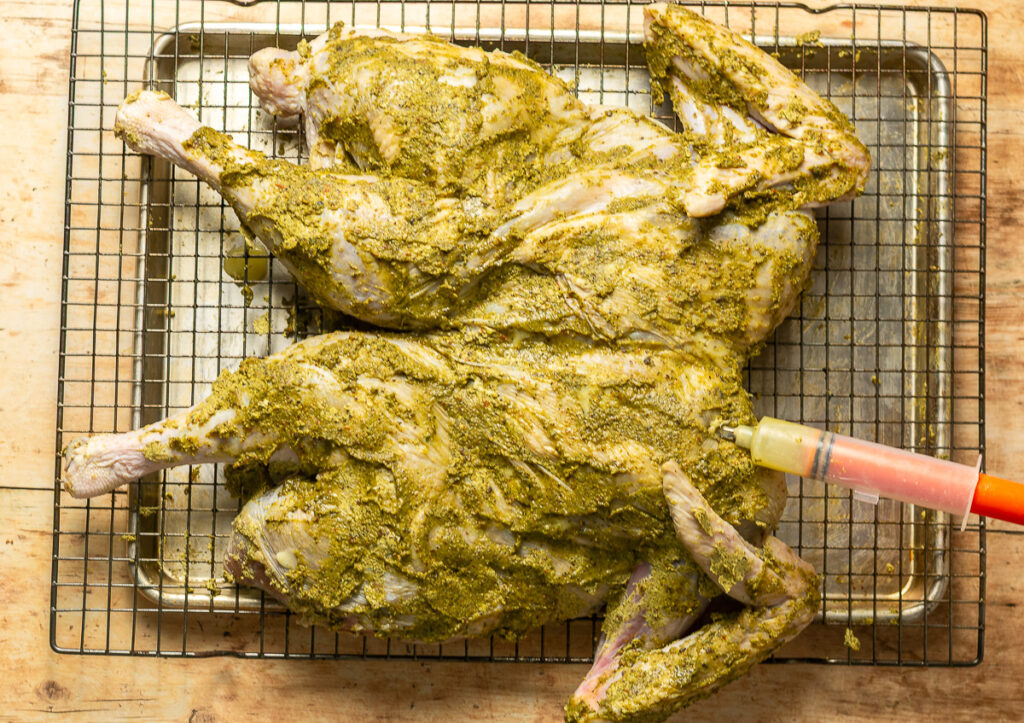
Step 9. Allow the turkey to marinate uncovered in the refrigerator for at least 6 hours before cooking. Keeping it uncovered will assist in additional moisture drying up for better caramelization.
Smoke the Jerk Turkey on the Grill
Step 1. Prepare your grill. Arrange coal briquettes with larger piles at both ends of the barrel to allow for the more intense heat to flank both ends of the turkey while the weaker heat is directly under the turkey. Place the wood chunks near the coal closest to the air source so that the air flow directs the smoky flavor across the turkey.
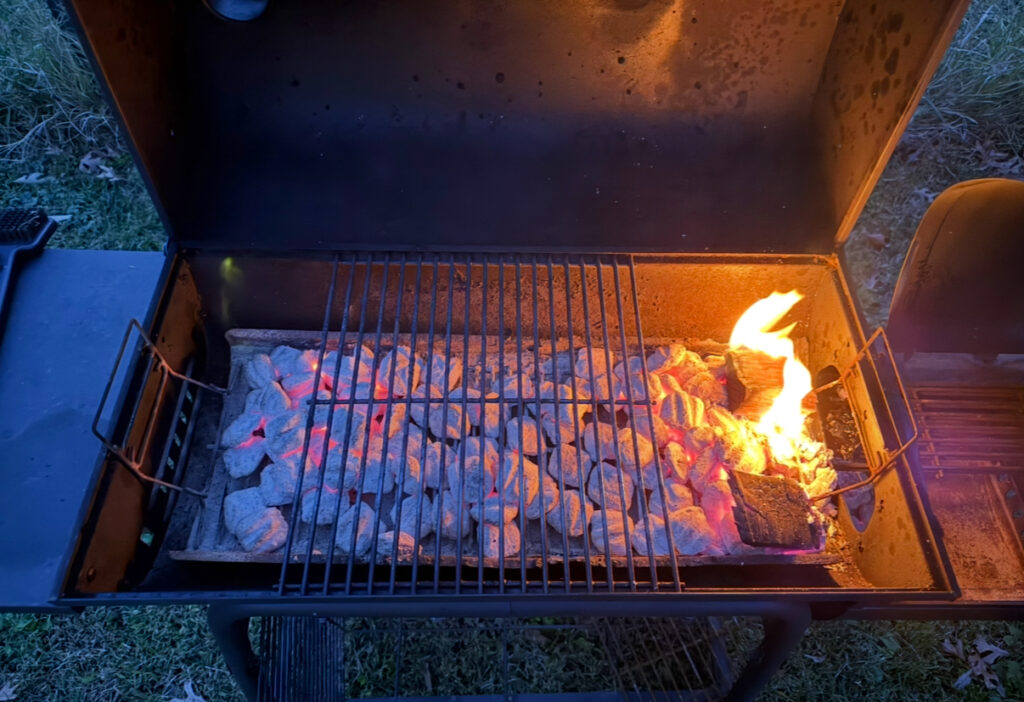
Step 2. Light the grill and wait for the coal to ash over and the fire to burn clean (when thick white smoke is no longer emanating from the chimney). The coal should be hot but there shouldn't be a raging fire.
Step 3. Place your meat thermometer in the thickest part of the turkey. For most larger birds, this will be the breast. Be sure to position the thermometer so it doesn't poke through to the other side or touch bone.
Step 4. Place the turkey on the grill in the same apparatus it marinated in (on a rack on a baking tray or roasting pan). The turkey should be in the center, with the more intense heat flanking each end.
Step 4. Close the barrel and allow the turkey to smoke undisturbed for an hour. Allow the vents to be at least a half open so the fire has enough air to keep it going. Once the hour has elapsed, remove the turkey and transfer is to an oven preheated to 325 °F.
It is important to immediately transfer the jerk turkey from the grill to the oven as this minimizes the turkey's time in the danger zone, maintaining food safety guidelines.
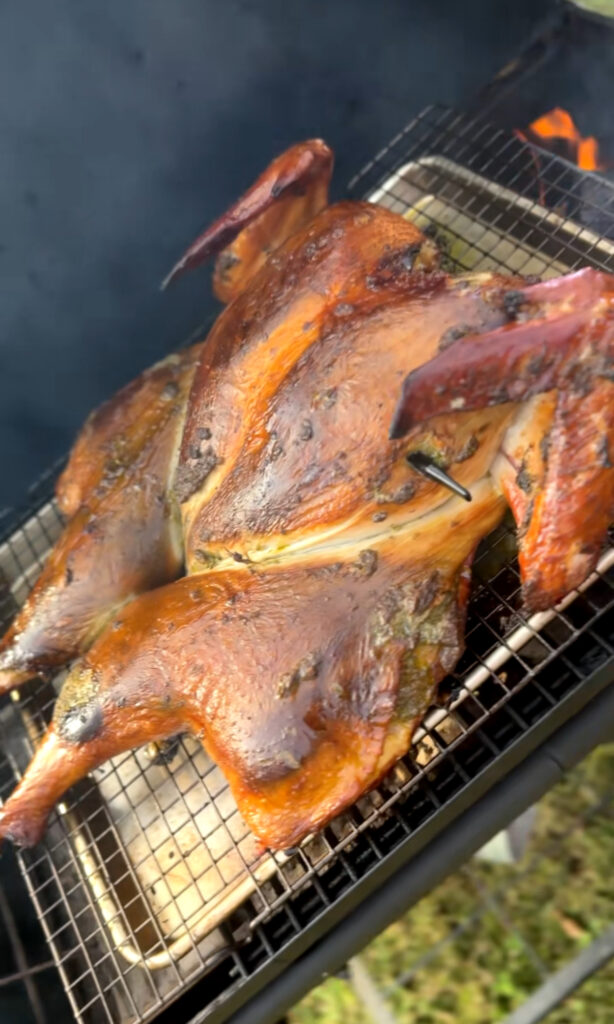
Step 5. Allow the jerk turkey to roast in the oven until it reaches an internal temperature of 160°F. The turkey will continue to cook once removed from the oven and will reach the recommended safe temperature of 165°F in a few minutes. Removing it at 160°F ensures that the meat doesn't dry out and overcook.
Step 6. Let the turkey rest for at least 30 minutes before removing the meat thermometer or carving. Removing the thermometer or cutting it without resting will cause all the juices to run out from the turkey, leaving the meat dry.
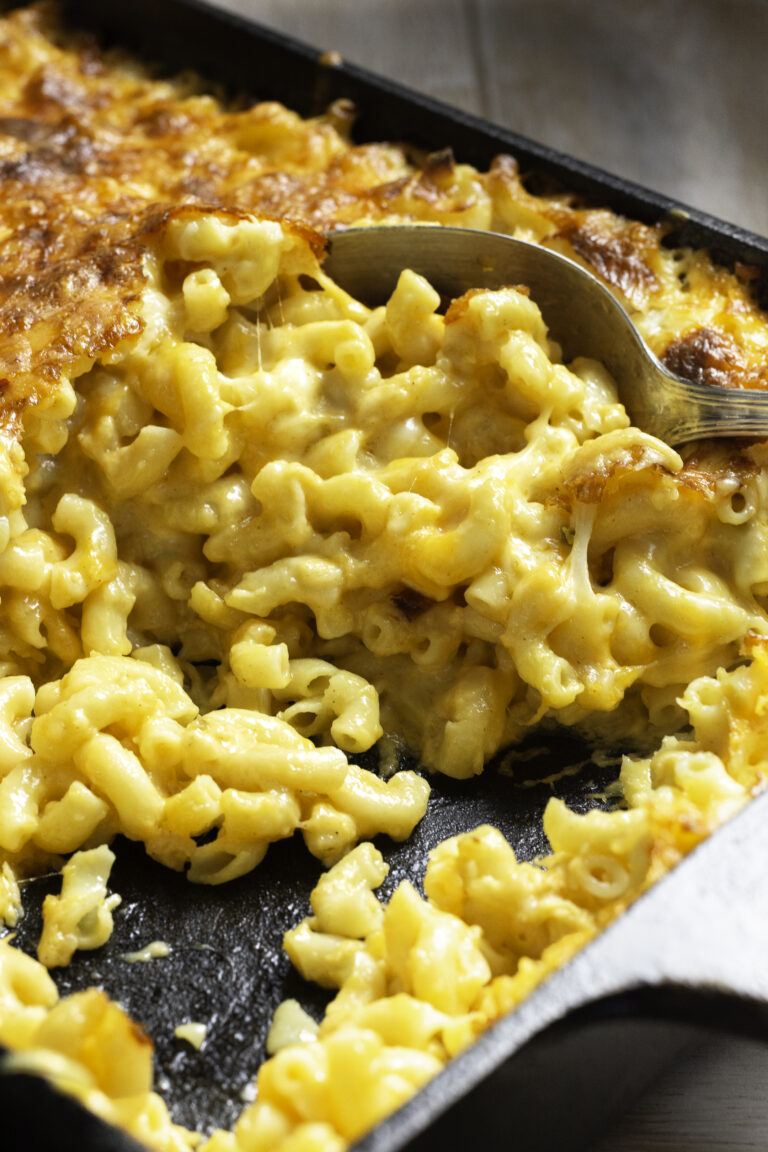
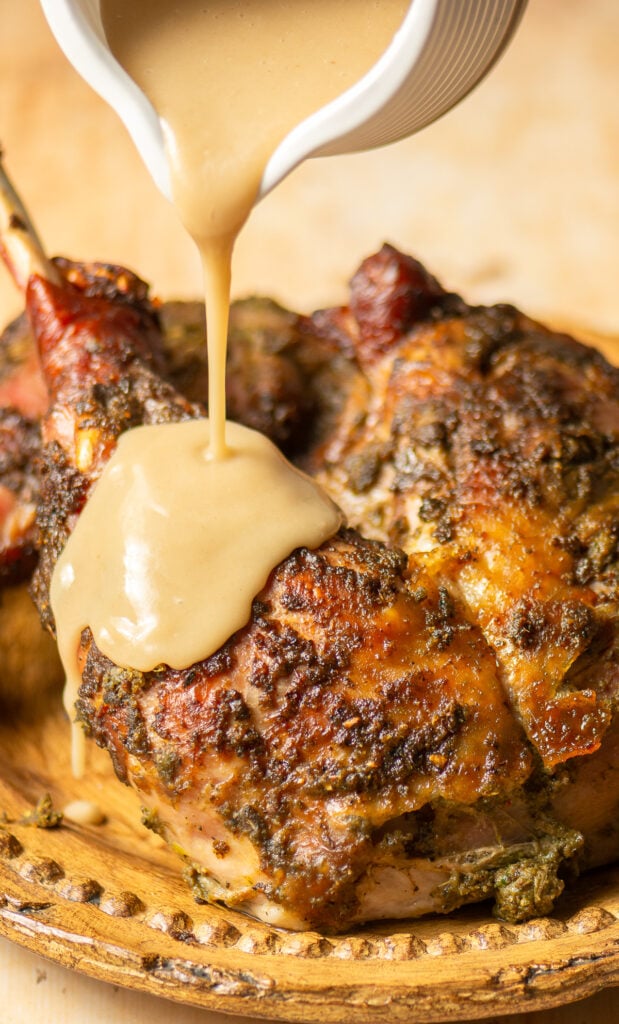
You can use the pan drippings in a homemade turkey gravy or just plain as a jus when serving the turkey! Serve alongside your favorite sides like this classic macaroni and cheese or this quick Jamaican rice & peas!
Store any leftovers in an airtight container and save the carcass for homemade stock!
Recipe Card

Ingredients
Equipment
Method
- Note: while you can thaw your turkey in the brine to save on time, keep in mind that it cannot start absorbing flavor from the brine until it is thawed. I prefer to start brining with a fully thawed turkey.
- Figure out how much water you will need to cover your turkey in your chosen container. Add your whole turkey (still in it's packaging), to your chosen container and fill it with water until the turkey is completely covered. Make note of how much water you will need.
- For the brine, use ½ a cup of Kosher Salt and ½ a cup granulated sugar per gallon of water. So just divide the total gallons of water you will need by 2 and this will be the amount of Kosher salt & granulated sugar in cups that you will use for your brine. For comparison, I used a 5-gallon bucket for a 12-pound turkey and covered it with three and a half gallons of water. I used one and three-quarters cups each of Kosher salt and granulated sugar in my brine along with the listed aromatics (3.5 gallons water÷2 = 1.75 cups Kosher salt & sugar, each).
- Add the allspice berries, thyme and 8 cups of water (from the water needed to cover the turkey) to a large pot and bring to a boil. Once the water comes a boil, remove the pot from the heat and allow the water to cool completely.
- Add the now cooled aromatic water and the rest of the water needed to cover the turkey to your chosen brining container.
- Add half a cup each of Kosher salt and granulated sugar per gallon of water used (as explained earlier) to the brining container. Stir until the salt & sugar are completely dissolved.
- Rinse turkey and remove the innards (saving them for later if you want to make gravy with the giblets). Slowly submerge the turkey in the prepared brine. Cover the container with the lid and refrigerate for 12-24 hours.
- Add the dark brown sugar, scallions, thyme, ginger, garlic, salt, scotch bonnet peppers, allspice berries and half (6 TBSP) of the softened butter to a high-powered blender and blend until completely smooth. Set aside, reserving a tablespoon to be used later when injecting the turkey with more flavor.
- Remove the turkey from the brine, draining it of any excess liquid. Do not rinse. Use paper towels to pat the turkey and get rid of any excess moisture.
- Using a sturdy pair of kitchen shears, cut along either side of the spine to completely remove the backbone. You may discard this or save it for a homemade stock or to use in your turkey gravy.
- Break the breast bone of the turkey. Position the turkey breast side up then assume a CPR stance. Place your dominant hand on top of the other and interlock your fingers. Position the heel of your bottom hand over the most protruding section of the center of the breast. Position your shoulders over the turkey and using your body weight, push down with your dominant hand to crack the breast bone. You should hear or feel a "pop" and the turkey should be able to lay flat. Ensure there is no excess water and use a textured but flat surface like a textured cutting board. Excess water can cause the turkey to slide from under you when cracking the breast bone resulting in a mess or injury.
- Using your fingers, gently pull the skin of the turkey away from meat being careful not to tear the skin. Using paper towels again, pat the turkey dry on both sides and under the skin to get rid of any moisture. Moisture is the enemy of caramelization and will prevent the skin from browning efficiently. Excess water also prevents the butter-based marinade from adhering to the meat of the turkey.
- Apply the jerk marinade to the turkey, making sure to get an equal amount of the marinade under the skin as on top and on the underside.
- Place the turkey on a rack breast-side up with the legs turned inward then place the rack in a roasting pan or other large enough baking tray.
- Melt the remaining 6 tablespoon of butter along with the tablespoon of jerk marinade reserved earlier. Allow the marinade to settle out then draw up the melted butter into a marinade injector. Inject in several parts of the turkey equally. Be sure to inject into each breast, thigh and leg.
- Allow the turkey to marinate uncovered in the refrigerator for at least 6 hours before cooking. Keeping it uncovered will assist in additional moisture drying out for better caramelization and crisper skin.
- Prepare your grill. Arrange coal briquettes with larger piles at both ends of the barrel to allow for the more intense heat to flank both ends of the turkey while the weaker heat is directly under the turkey. Place the wood chunks near the coal closest to the air source so that the air flow directs the smoky flavor across the turkey.
- Light the grill and wait for the coal to ash over and the fire to burn clean (when thick white smoke is no longer emanating from the chimney). The coal should be hot but there shouldn't be a raging fire.
- Place your meat thermometer in the thickest part of the turkey. For most larger birds, this will be the breast. Be sure to position the thermometer so it doesn't poke through to the other side or touch bone as this will give inaccurate readings.
- Place the turkey on the grill in the same apparatus it marinated in (on a rack on a baking tray or roasting pan). The turkey should be in the center of the grill, with the more intense heat flanking each end.
- Close the barrel and allow the turkey to smoke undisturbed for an hour. Allow the vents to be at least a half open so the fire has enough air to keep it going. Once the hour has elapsed, remove the turkey and transfer is to an oven preheated to 325 °F. It is important to immediately transfer the jerk turkey from the grill to the oven as this minimizes the turkey's time in the danger zone, maintaining food safety guidelines.
- Allow the jerk turkey to roast in the oven until it reaches an internal temperature of 160°F. The turkey will continue to cook once removed from the oven and will reach the recommended safe temperature of 165°F within a few minutes of being removed from the oven. Removing it at 160°F ensures that the meat doesn't dry out and overcook.
- Let the turkey rest for at least 30 minutes before removing the meat thermometer or carving to avoid the juices running out from the turkey, leaving the meat dry.
Notes
- Brine the turkey 48 hours before cooking (Tuesday evening after 6pm if cooking for US Thanksgiving).
- Remove turkey from brine 12-24 hours before cooking & apply jerk rub (Wednesday evening if cooking for US Thanksgiving)
- Get the turkey on the grill at least 4 hours before you want to serve it. Keep in mind, this turkey is finished in the oven at 325°F.
Love this recipe?
Tag @TheStushKitchen on instagram!