
Chicken Stock From Rotisserie Chicken (That Gels)
If you're not making chicken stock from rotisserie chicken carcasses, you're missing out! I tasted this homemade chicken stock hour by hour to pinpoint exactly when the flavor peaks. The result has 10 times the flavor of store-bought stocks, is packed with nutrients and collagen, and practically makes itself on the stove or in a crockpot!
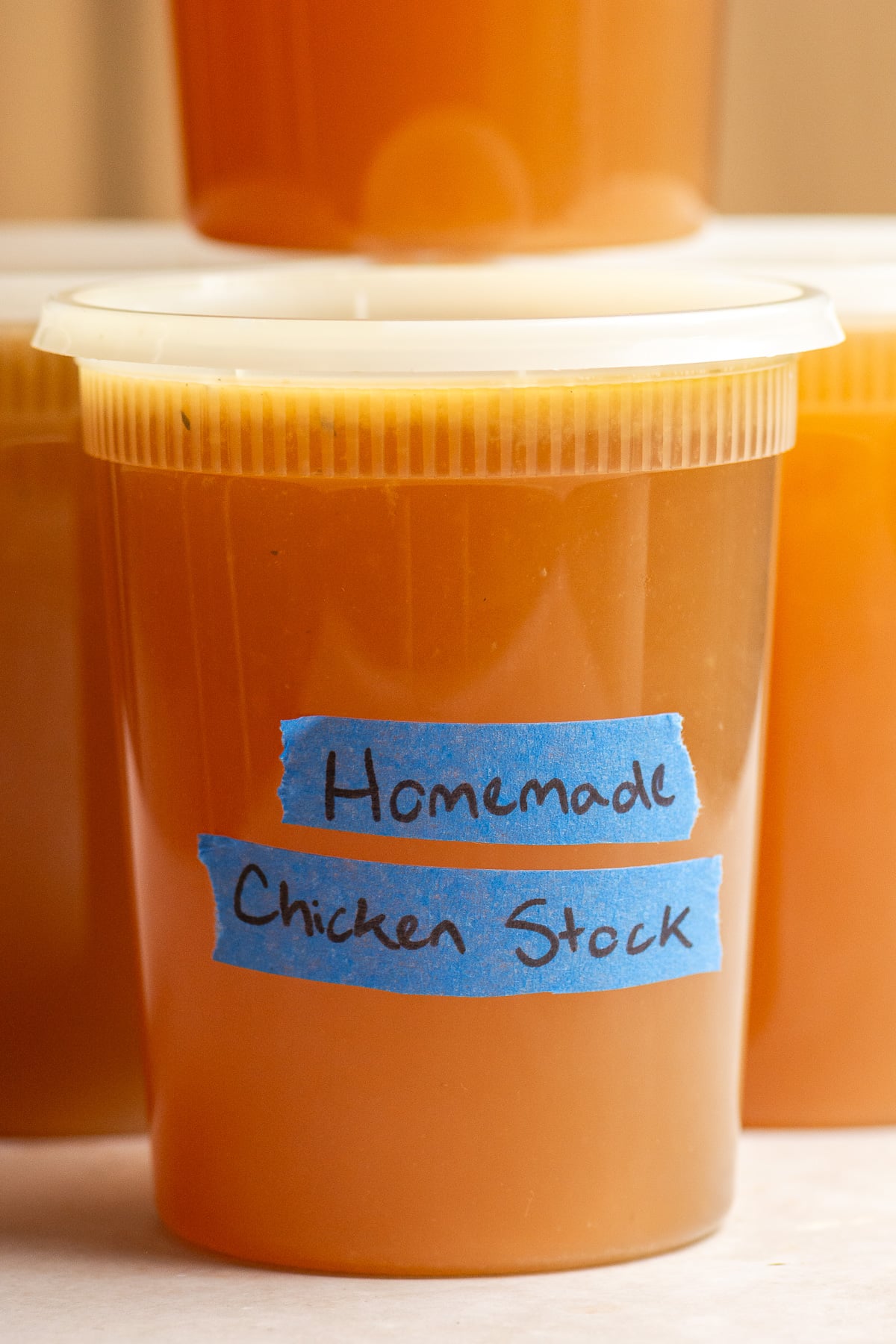
A homemade stock is one of the most versatile ingredients in your kitchen, so this is definitely one to keep on hand for any recipes using chicken stock (or broth)!
Recipe Overview: Chicken Stock From Rotisserie Chicken
✅ Recipe Name: Chicken Stock From Rotisserie Chicken
🕒 Ready In: 12 hours
👪 Yield: 3 quarts
🍽 Calories: 9 calories per cup (estimated)
🥣 Main Ingredients: rotisserie chicken carcass, water, herbs & veggies
👌 Difficulty: Easy! Set it and forget it!
SUMMARIZE AND SAVE THIS CONTENT ON
Why You'll Love This Homemade Chicken Stock Recipe
- It has a lot more flavor and nutrients than store-bought chicken stock thanks to hours-long simmering!
- You can set it and forget it! Since you won't need to skim the stock the same way you'd have to with a stock made with raw chicken, it's super low-effort!
- I tested it hour-by-hour - seriously! I wanted to give you real, tried-and-true recommendations so you can get the best results!
- It turns scraps into liquid gold. A rotisserie carcass and a handful of wilting veggies are all you need, so it's basically free!
Jump to:
- Recipe Overview: Chicken Stock From Rotisserie Chicken
- Why You'll Love This Homemade Chicken Stock Recipe
- Key Ingredients
- How to Make Chicken Stock From Rotisserie Chicken
- FAQs
- Tips for the Best Homemade Stock
- Recipes Using Chicken Stock That You'll Love
- The BEST Chicken Stock From Leftover Rotisserie Chicken
Key Ingredients
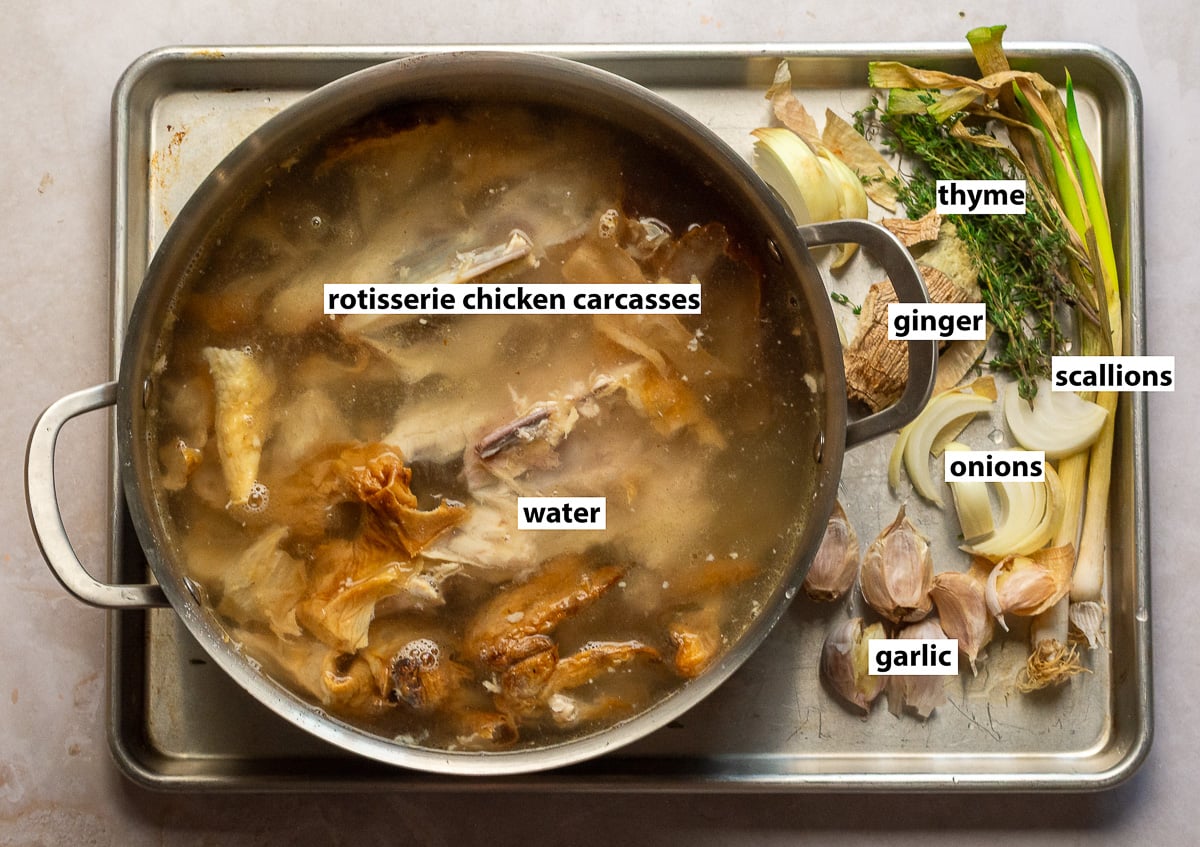
Rotisserie chicken carcasses. Any store-bought rotisserie chicken carcass will work, and you can even use leftovers from the chicken you roasted during the week or whatever's left of your whole jerk chicken for a smoky-flavored chicken stock.
Herbs & veggies. My go-tos are always thyme, ginger, garlic, and onions, but I love to throw in any herbs or veggies that are wilted so they don't go to waste! I always save leftover veggies and herbs when I make my Jamaican green seasoning recipe or my homemade jerk marinade.
How to Make Chicken Stock From Rotisserie Chicken
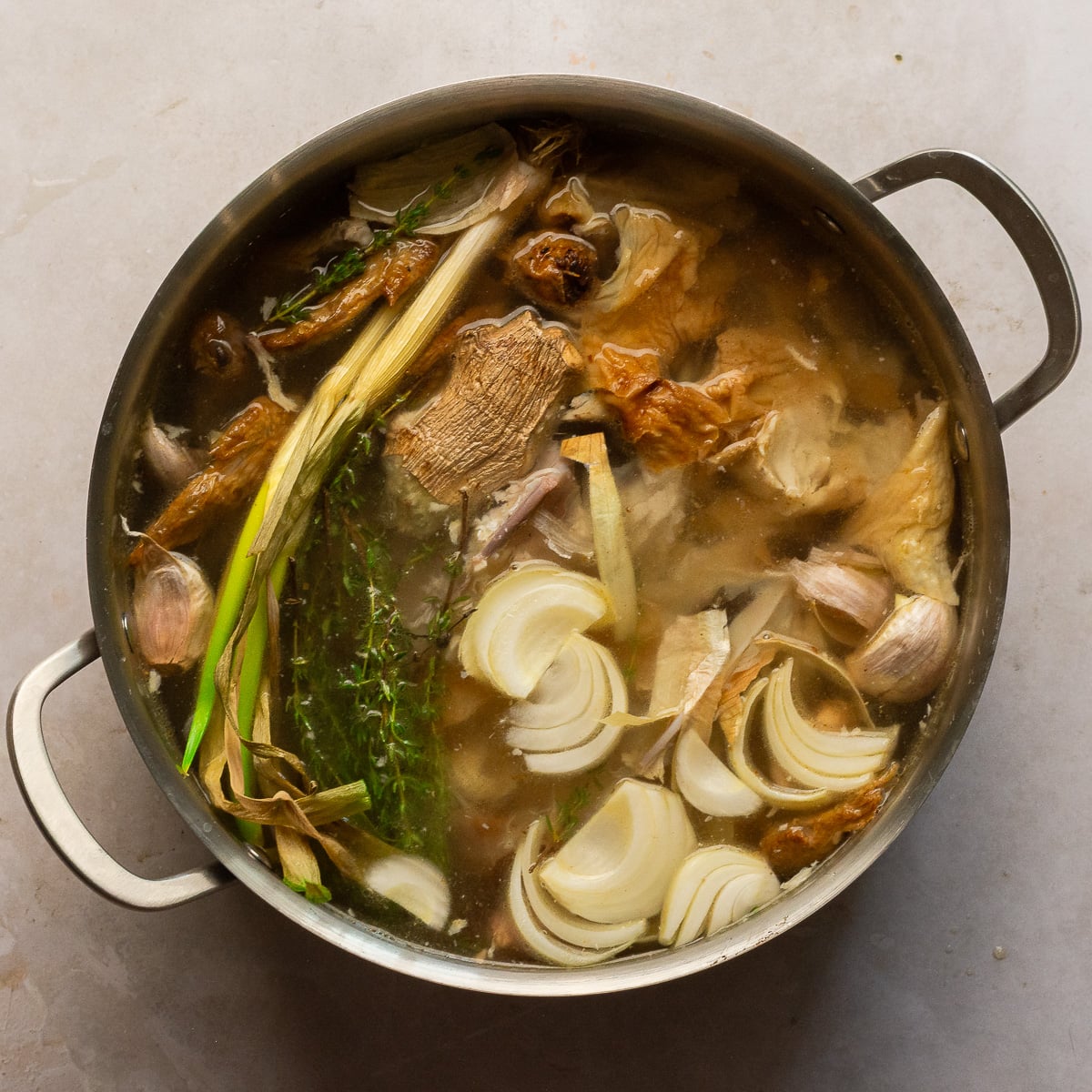
- Step 1: Add all the ingredients to a stockpot.
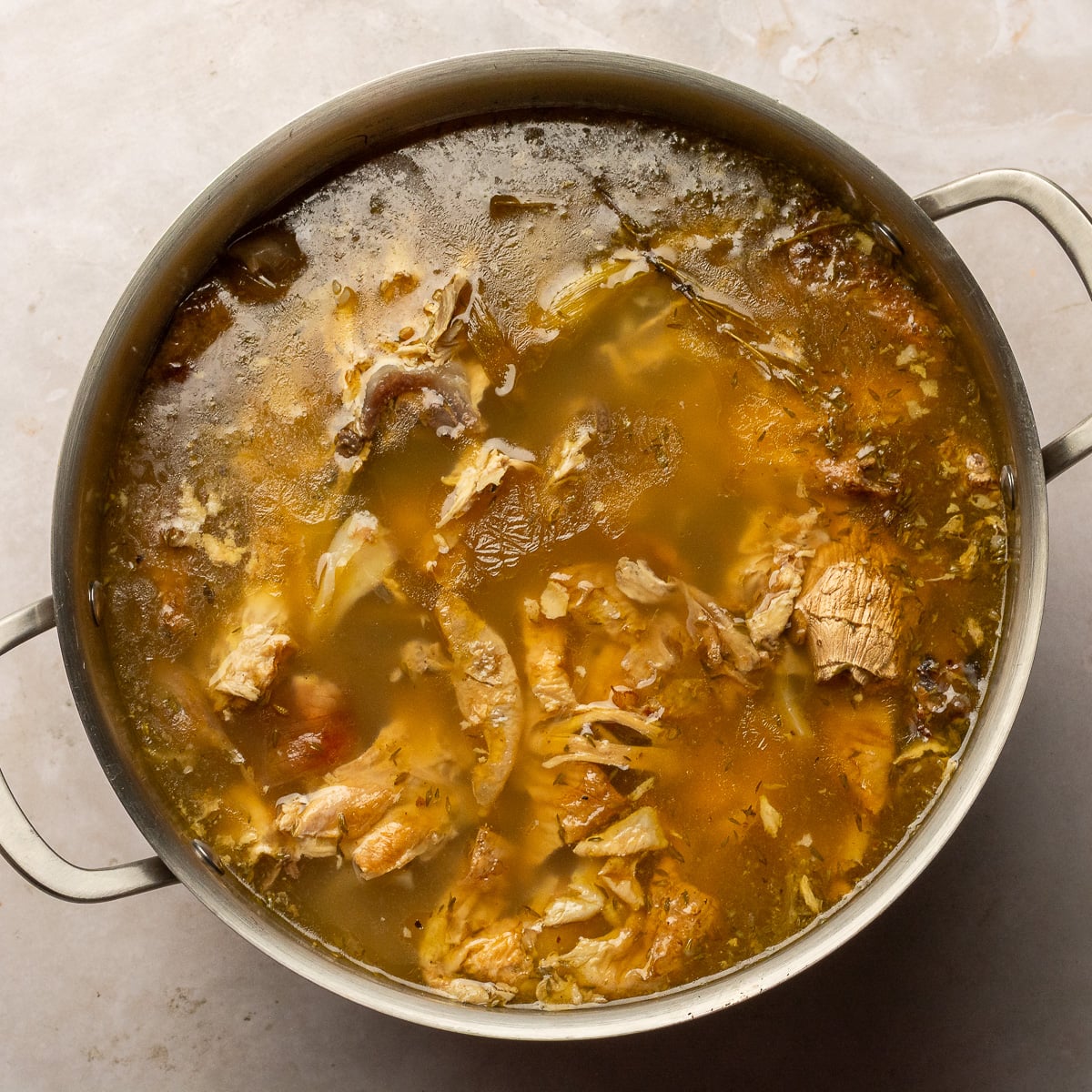
- Step 2: Simmer the homemade chicken stock for 12 hours.
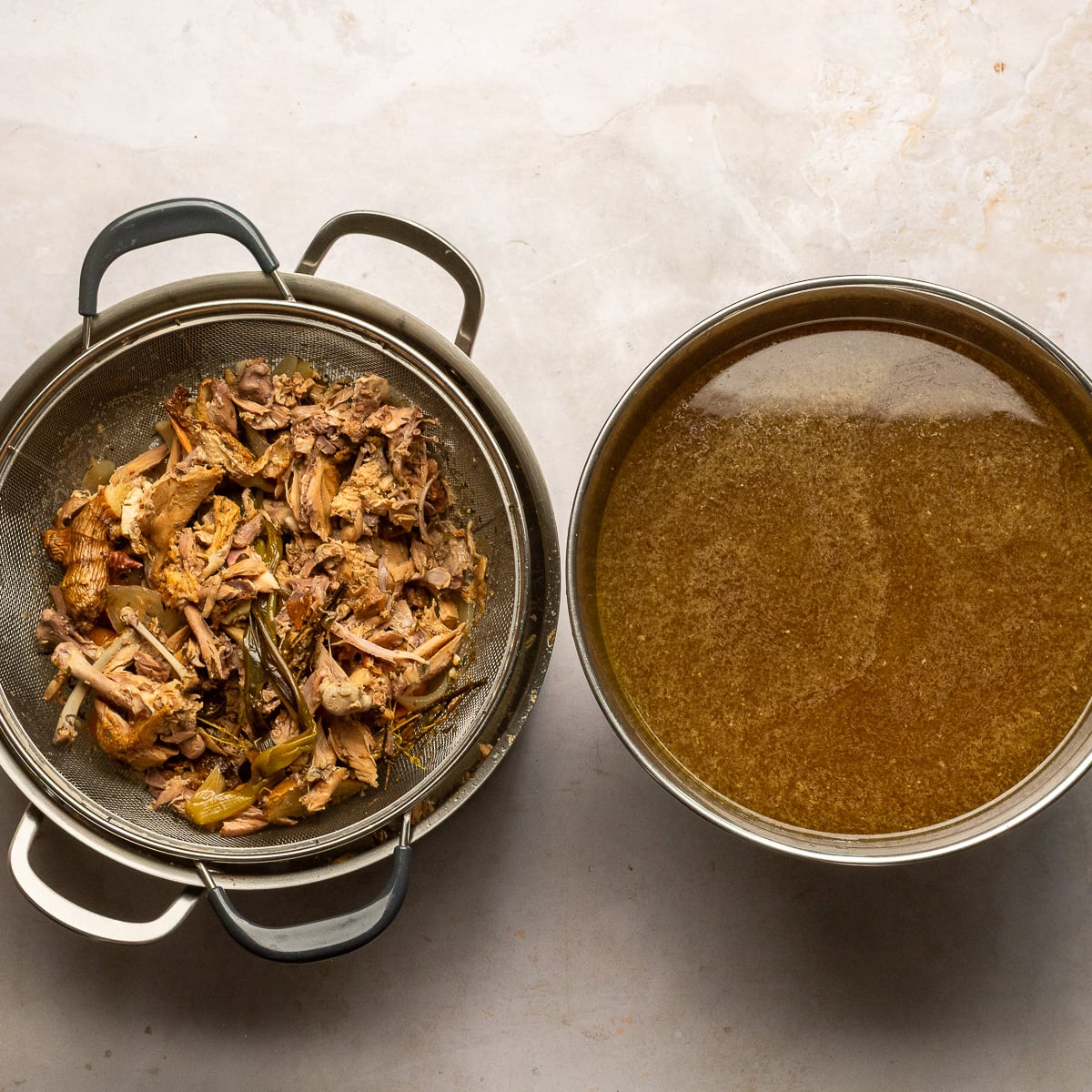
- Step 3: Strain the chicken stock from the rotisserie chicken and vegetable pieces and portion for use.
FAQs
I recommend 12 hours for stock with a richer mouthfeel and deeper, more nuanced flavors, but 8 hours at minimum and 20 hours max.
When testing this recipe, I consistently tasted the stock every hour to monitor the flavor development. No real flavor developed until hour 3. From hours 3-7, the flavor had not further dramatically developed, but at the 8-hour mark there was a noticeable difference in flavor. I was able to clearly taste the flavor of all the herbs and vegetables I added, and the stock had a moderate chicken flavor.
There was another jump in flavor quality at the 12-hour mark. After 12 hours, the stock tasted heavily of chicken, had a richer mouthfeel, and the sweeter notes of added aromatics came through even more.
After 20 hours, I found that the chicken flavor did not have any additional depth, but aromatics and vegetables continued to deepen in flavor, with some notes becoming bitter.
A gelatinous chicken stock is a sign of a job well done! As the chicken stock simmers, the collagen in the bones breaks down and is pulled into liquid. This collagen resolidifies into a jello-like consistency once the chicken stock is refrigerated.
Not as long as you keep the heat low. Since the rotisserie chicken is already cooked, it produces much less (if any) white foam as it simmers compared to a chicken stock started with raw chicken/bones. If you are seeing foam collecting on top of your chicken stock while it cooks, you should skim it, but this is likely an indication that your heat is too high and should be lowered.
The only thing you will likely have to remove is any fat that renders, and this is totally up to personal preference. I like to keep the chicken fat since it doesn't render in copious amounts and it makes the chicken stock richer.
You can, but as the stock simmers, it will produce more white froth, requiring more maintenance. If you're starting with raw chicken/bones, I recommend roasting them in the oven until browned and cooked through before adding them to a stockpot to simmer. This will give you a chicken stock that has a more complex flavor and is less needy since you won't have to skim it as often.
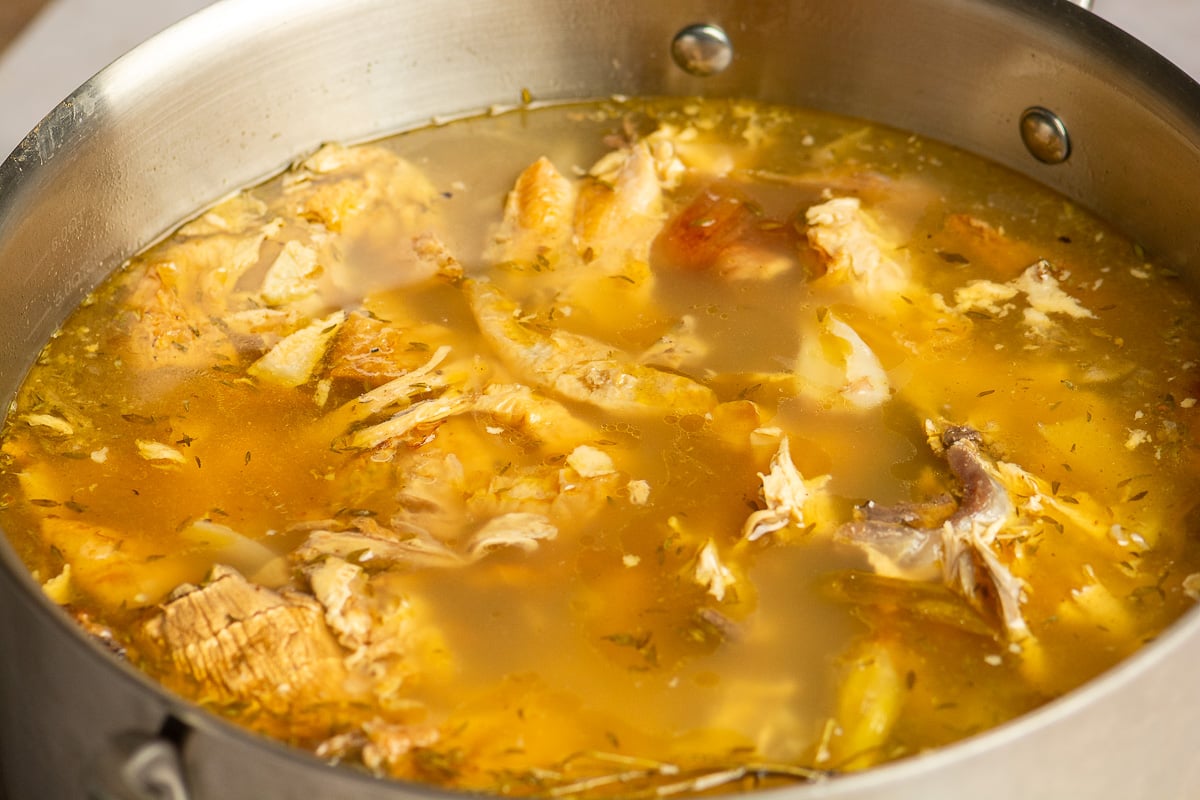
A gentle simmer has a slow but steady bubbling with small bubbles. I can achieve this at "low" on my stove.
Chicken stock has a deeper flavor since it's usually simmered for hours, while a broth is lighter in both flavor and color. You can use chicken stock in almost any recipe that calls for chicken broth.
Tips for the Best Homemade Stock
- Don't let the stock boil. This makes the chicken stock cloudy and can cause a sour/rancid flavor.
- Cut or crack the bones open. The larger surface area allows for more extraction of flavor, gelatin, and nutrients.
- Cover the stock while it simmers to prevent too much water evaporating.
- Add roasted chicken necks and/or feet to fortify your chicken stock with more collagen!
Recipes Using Chicken Stock That You'll Love

Tried this recipe? Please leave a comment with a star rating. I love hearing your feedback, and it greatly helps me improve recipes for you!

The BEST Chicken Stock From Leftover Rotisserie Chicken
Ingredients
Equipment
Method
- Strip the rotisserie chickens of any excess meat and crack the bones to expose some of the marrow. Be sure to save the skin for the chicken stock.2 large rotisserie chicken carcasses
- Add the chicken carcasses to a large stockpot (or crockpot) along with all the other ingredients. Cover and allow to simmer gently over low heat for 12-14 hours (but at least 8 hours and no more than 20 hours). For a crockpot, set it to low and allow the stock to simmer for the same amount of time.3½ liters water, ½ medium yellow onion, 10 sprigs thyme, 50 grams ginger, 6 large cloves garlic, 2 stalks scallions, ½ teaspoon salt
- Once done, strain the stock from the bones. Allow the stock to cool before portioning it into airtight containers.
- Refrigerate for 3-4 days or freeze for 4-6 months.
Nutrition
Notes
- You can get creative and use any herbs or vegetables you like. I reach for my wilting herbs & veggies first.
- I have left my stock on the stove overnight, but if you prefer not to, I suggest starting it first thing in the morning on a day you're home or using a crockpot!
- A chicken stock from rotisserie chicken tends not to produce any of the white foam typically seen when making a stock from raw chicken or/bones. If you notice collections of white foam, it is an indication that your heat is too high. Skim the froth with a spoon and lower the heat so that the stock is very gently bubbling.



I LOVE this recipe! This stock is so much better than anything store bought. The texture is better too! Can't wait to make another batch using this recipe!
So happy you liked it Ebony!